
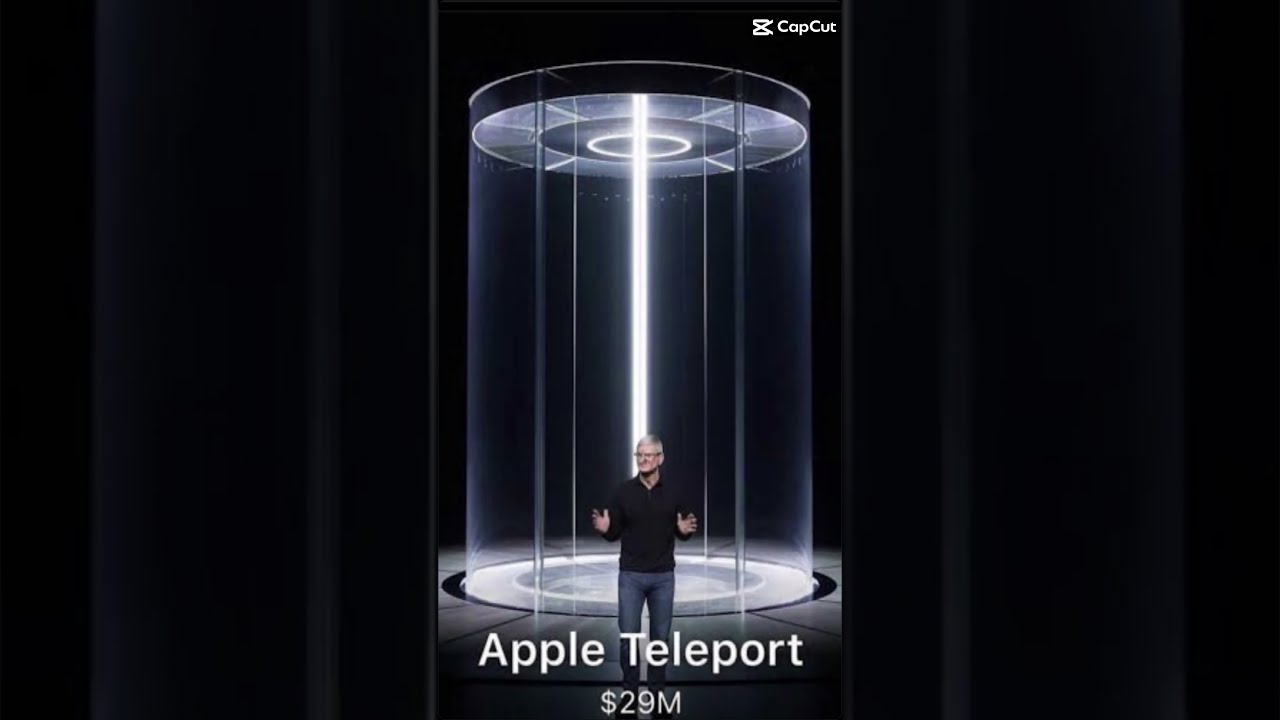
In the world of technology, innovation is constantly pushing boundaries. Every so often, a new concept or idea emerges that promises to revolutionize the way we live, work, and communicate. One such intriguing idea that has caught the attention of tech enthusiasts is the Apple Teleport. While it might sound like something straight out of a science fiction movie, the Apple Teleport could very well be the future of personal technology, communication, and virtual experiences.
In this article, we’ll dive deep into what the Apple Teleport is, how it might work, and the potential impact it could have on our lives. From virtual reality to augmented reality, and even potential advancements in telecommunication, the Apple Teleport could redefine our relationship with technology in ways we never imagined.
What is the Apple Teleport?
The Apple Teleport concept is based on the idea of teleportation, a technology that would allow users to instantly move from one location to another, almost like a sci-fi fantasy made real. While actual teleportation of physical objects or people might still be far off, the Apple Teleport is likely focused on virtual and augmented reality, using advanced technologies to create the feeling of “being there” without actually being in a physical location.
The Apple Teleport could use a combination of technologies, including 3D holography, virtual reality (VR), and augmented reality (AR), to provide users with a fully immersive experience. It would allow you to “teleport” to a distant location, whether it’s a virtual meeting space, a concert, or even an immersive virtual shopping experience—all from the comfort of your own home.
While details are still scarce, the Apple Teleport could be a revolutionary step in how we connect with one another, experience entertainment, and navigate our world.
The Core Technologies Behind the Apple Teleport
Several cutting-edge technologies would need to come together for the Apple Teleport to work. Let’s take a look at the most promising technologies that could be used to create such a system:
1. Virtual Reality (VR) and Augmented Reality (AR)
Virtual reality and augmented reality are two technologies that have made great strides in recent years, and they would play a key role in the development of the Apple Teleport. VR immerses users in a completely virtual environment, while AR overlays digital content on top of the physical world.
For the Apple Teleport, these technologies could combine to create an experience where users feel as though they are physically present in a virtual location, even though they are not. Through a headset or specialized glasses, users could “teleport” to any location in the world—or even to fictional worlds—and interact with their surroundings in a lifelike way.
2. 3D Holography
One of the most exciting possibilities for the Apple Teleport is the use of 3D holography. Imagine being able to project a 3D image of a person, object, or place in real time, allowing you to interact with them as though they were physically present. This technology is still in its infancy, but companies like Apple are known for pushing the boundaries of what’s possible.
Using advanced holographic technology, the Apple Teleport could project real-time 3D holograms of people, objects, or environments into your living room, creating a sense of presence that goes beyond traditional video calls or static images.
3. AI and Machine Learning
Artificial intelligence (AI) and machine learning will also play a key role in the Apple Teleport. These technologies could help create more realistic virtual environments by analyzing and responding to user actions. For instance, AI could be used to simulate realistic movements and interactions with virtual objects, creating a more immersive experience.
Machine learning could also improve the Apple Teleport experience over time, as the system learns from user behavior and preferences, making interactions more natural and intuitive.
4. 5G and Future Communication Networks
For the Apple Teleport to work in real time, it would need a fast and reliable internet connection. The advent of 5G networks, with their ultra-low latency and high-speed data transfer, could make this possible. 5G technology would allow users to “teleport” to distant locations without lag or delay, making virtual experiences seamless and highly interactive.
As 5G technology continues to roll out across the globe, the Apple Teleport could take advantage of its capabilities to deliver a truly next-gen experience, enabling real-time communication and immersive virtual environments that feel more lifelike than ever before.
Potential Applications of the Apple Teleport
Now that we have an understanding of the technologies behind the Apple Teleport, let’s explore some of the most exciting potential applications of this innovation.
1. Virtual Meetings and Workspaces
The Apple Teleport could revolutionize remote work and virtual meetings. With the ongoing shift towards hybrid work models, employees often find themselves relying on video calls and conference tools to communicate with their colleagues. However, these tools can often feel disconnected, lacking the sense of presence and interaction that comes with being in the same physical room.
With the Apple Teleport, employees could attend virtual meetings in lifelike 3D environments, with their coworkers projected as holograms right in front of them. This would create a more natural and interactive meeting experience, where participants can read each other’s body language, engage in spontaneous conversations, and collaborate in real time as if they were in the same physical space.
2. Entertainment and Gaming
Entertainment is another area where the Apple Teleport could have a massive impact. Imagine attending a concert or a live sports event from the comfort of your home, with 3D holograms of the performers or athletes appearing in front of you. You could move around the virtual environment, experiencing the event as if you were physically present.
For gaming, the Apple Teleport could open up entirely new dimensions. Gamers could “teleport” into their favorite virtual worlds, where they can interact with characters and environments in ways that current gaming systems can’t replicate. The immersive possibilities are endless, allowing for highly interactive, multiplayer experiences that feel incredibly lifelike.
3. Education and Training
The Apple Teleport could also play a significant role in education and training. Instead of reading about historical events or watching videos, students could “teleport” to the scenes of history, experiencing key moments firsthand. Whether it’s standing in the middle of a battlefield during the American Revolution or exploring ancient ruins, the Apple Teleport could make learning an immersive experience.
Similarly, for professional training, individuals could practice complex tasks in virtual environments, such as surgery, firefighting, or engineering, without the risks associated with real-life practice. This could greatly enhance the quality and accessibility of education and training programs.
4. Travel and Exploration
The Apple Teleport could provide a new way to explore the world without leaving your home. Instead of traveling long distances, you could simply “teleport” to a different part of the world and experience it as if you were there. Whether it’s exploring the Great Wall of China, visiting the pyramids of Egypt, or walking through the streets of Paris, the Apple Teleport could make the world more accessible than ever before.
The Future of the Apple Teleport
While the Apple Teleport is still a concept, the technologies required to make it a reality are already in development. From VR and AR to holography, AI, and 5G, each piece of the puzzle is coming together to create a more immersive and connected world. It may take several years before we see a fully functional Apple Teleport, but the potential is undeniable.
As technology continues to advance, the dream of teleportation may shift from a far-fetched fantasy to a tangible reality. The Apple Teleport could redefine how we communicate, work, play, and learn, opening up exciting new possibilities for the future.
Conclusion
The concept of the Apple Teleport may seem futuristic, but the technologies required to make it a reality are already on the horizon. With advancements in VR, AR, holography, AI, and 5G, the potential for immersive, real-time teleportation is closer than ever. Whether it’s for work, entertainment, education, or exploration, the Apple Teleport could change the way we experience the world and connect with others.
As we look ahead, it’s clear that the Apple Teleport is not just a concept—it could be the future of personal technology, bridging the gap between the physical and virtual worlds in ways we never thought possible. The journey towards this innovation is just beginning, and it’s an exciting time to imagine what the future holds.