
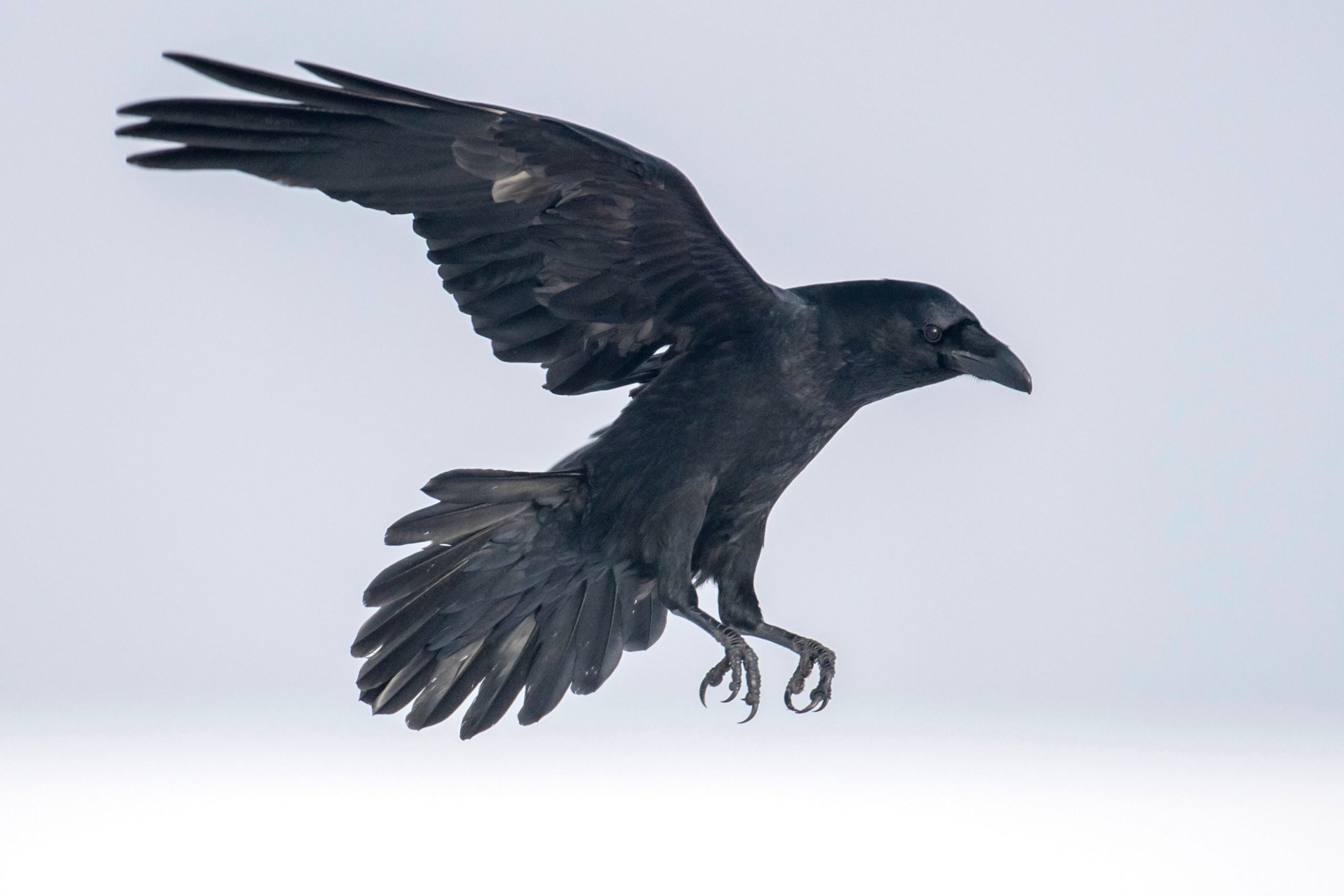
Introduction: The Feathered Enigma of the Corvid Family
When a large black bird crosses your path, does it inspire awe or unease? Your reaction likely depends on whether you’re seeing a raven or its smaller cousin, the crow. These two intelligent corvid species have captivated human imagination for centuries—one revered in mythology, the other often maligned in urban legends. But what really separates these dark-feathered relatives, and why does society embrace ravens while shunning crows?
This 3,000-word deep dive will explore:
- Key biological differences between ravens and crows
- Their contrasting roles in global folklore and culture
- Scientific insights into their remarkable intelligence
- Psychological reasons behind our unequal perceptions
- Current conservation status and ecological importance
- How to identify them in your backyard
Prepare to have your perceptions transformed about these misunderstood avian geniuses.
Section 1: Biological Showdown – Raven vs Crow
Size & Physical Differences
| Feature | Raven | Crow |
|---|---|---|
| Length | 24-27 inches | 16-21 inches |
| Wingspan | 46-56 inches | 33-39 inches |
| Weight | 2.6-4.4 lbs | 1-1.5 lbs |
| Bill Shape | Massive, curved | Smaller, straight |
| Tail Shape | Wedge-shaped | Fan-shaped |
| Throat Feathers | Shaggy (“beard”) | Smooth |
Pro Tip: Listen for the distinctive “cronk” of a raven versus the classic “caw” of a crow.
Behavioral Contrasts
- Ravens are solitary hunters; crows prefer groups
- Ravens perform aerial acrobatics; crows have steadier flight
- Crows mob predators; ravens observe cautiously
- Ravens mate for life; crows may change partners
Section 2: Cultural Mythology – Why Ravens Win the PR War
Ravens in Legend
- Norse Mythology: Odin’s two ravens (Huginn and Muninn) as thought and memory
- Native American: Creator/trickster figure in Pacific Northwest cultures
- Celtic: Morrigan’s battlefield companion
- Literature: Poe’s iconic poem cemented their mysterious image
Crows in Folklore
- Often portrayed as death omens
- Associated with witchcraft in Europe
- Considered pests in agricultural communities
- Exception: Asian cultures view crows more positively
Interesting Twist: Both appear in the Bible—a raven fed Elijah, while crows symbolized desolation.
Section 3: Scientific Intelligence Showdown
Cognitive Abilities
Both species demonstrate:
- Tool use and modification
- Complex problem-solving
- Facial recognition of humans
- Play behavior
Recent Study (2023): Ravens outperformed crows in delayed gratification tests, waiting up to 15 minutes for better rewards.
Communication Skills
| Species | Vocal Range | Mimicry | Gestures |
|---|---|---|---|
| Raven | 100+ sounds | Excellent | Points with beak |
| Crow | 20-30 sounds | Limited | Few observed |
Section 4: The Psychology of Our Prejudice
Why We Favor Ravens
- Mystique Factor: Their solitary nature seems noble
- Media Portrayal: From Game of Thrones to Native art
- Rarity: Less common in cities = more special
- Appearance: Larger size reads as majestic
Why We Dislike Crows
- Urban Nuisance: Raids trash cans in groups
- Uncanny Intelligence: Their human-like awareness unsettles us
- Murder Myth: Their group name fuels superstition
- Sound Pollution: Harsh caws annoy city dwellers
Cognitive Bias Alert: We judge animals by their proximity to human habitats—forest ravens seem wild and free, while urban crows feel like trespassers.
Section 5: Ecological Importance – Beyond Appearances
Shared Environmental Roles
- Nature’s cleanup crew (carrion eaters)
- Seed dispersers
- Pest controllers (eat insects/rodents)
- Ecosystem health indicators
Conservation Status
| Species | Population Trend | Threats |
|---|---|---|
| Common Raven | Increasing | None (adaptable) |
| American Crow | Stable | West Nile Virus |
| Northwestern Crow | Declining | Habitat loss |
Irony: Despite human dislike, crows help our cities by consuming tons of garbage and pests annually.
Section 6: How to Tell Them Apart in the Wild
Field Identification Guide
- Listen: Raven = deep croak; Crow = sharp “caw”
- Watch Flight: Raven soars; Crow flaps steadily
- Check Tail: Raven = wedge; Crow = fan
- Observe Behavior: Ravens often alone; crows in groups
- Location: Ravens prefer wild areas; crows thrive in cities
Beginner Tip: If it’s in a Walmart parking lot, it’s probably a crow.
Section 7: Changing Perspectives – The Corvid Renaissance
Modern science is reshaping our views:
- Ravens demonstrate theory of mind
- Crows recognize human faces for years
- Both species hold “funerals” for dead companions
- Urban corvid populations are evolving smarter behaviors
Conservation Note: Some cities now install crow-proof trash cans rather than exterminate these adaptive survivors.
Conclusion: Embracing Our Dark-Feathered Neighbors
The raven-crow divide reveals more about humans than birds:
- We romanticize distance (ravens in wilderness)
- Demonize familiarity (crows in our cities)
- Both species display astonishing intelligence
- Each plays vital ecological roles
Perhaps it’s time to see both ravens AND crows for what they truly are: feathered geniuses that have outsmarted our prejudices for millennia. Next time you hear that distinctive “cronk” or “caw,” take a moment to appreciate these remarkable corvids—not as omens or pests, but as evolutionary success stories wearing sleek black feathers.